Is Upgrading to an Energy-Saving Motor Worth It for Industrial Businesses?

Industrial motors power essential equipment such as pumps, compressors, fans, and conveyors. However, conventional motors can consume significant amounts of electricity, especially when operating continuously or under heavy workloads.
Upgrading to an energy-saving motor for industrial applications can help businesses reduce electricity costs, improve equipment performance, and increase energy efficiency. Although the initial investment may be higher, the long-term savings can make the upgrade worthwhile.

1. Reduce Electricity Consumption

One of the main reasons businesses consider upgrading to energy-efficient motors is to reduce electricity consumption. Industrial motors often operate for long hours, making them a significant part of a facility’s overall energy usage. Even a small improvement in motor efficiency can result in meaningful savings when equipment runs continuously.
Energy-saving motors are designed to convert electrical energy into mechanical power more efficiently. They reduce energy losses during operation, allowing machinery to perform its intended tasks while using less electricity. This can be particularly beneficial for facilities that operate multiple motors across different production processes.

2. Lower Long-Term Operating Costs

Electricity costs can take up a significant portion of an industrial business’s operating budget, particularly when motor-driven machinery runs across multiple shifts. Replacing inefficient motors with energy-efficient alternatives can help lower ongoing energy expenses.
Although energy-saving motors may require a higher initial investment, reduced electricity consumption can deliver long-term savings. Businesses should therefore consider the total cost of ownership when evaluating an upgrade rather than focusing solely on the upfront cost.
Important cost considerations include:
  • Purchase and installation costs: Evaluate the price of the new motor, installation work, and any required system modifications.
  • Electricity savings: Estimate potential reductions in energy consumption based on operating hours and electricity rates.
  • Maintenance expenses: Consider whether the replacement motor can help reduce maintenance requirements.
  • Equipment lifespan: Evaluate how long the motor is expected to operate reliably.
By comparing these factors, businesses can determine whether upgrading offers sufficient financial benefits over time.
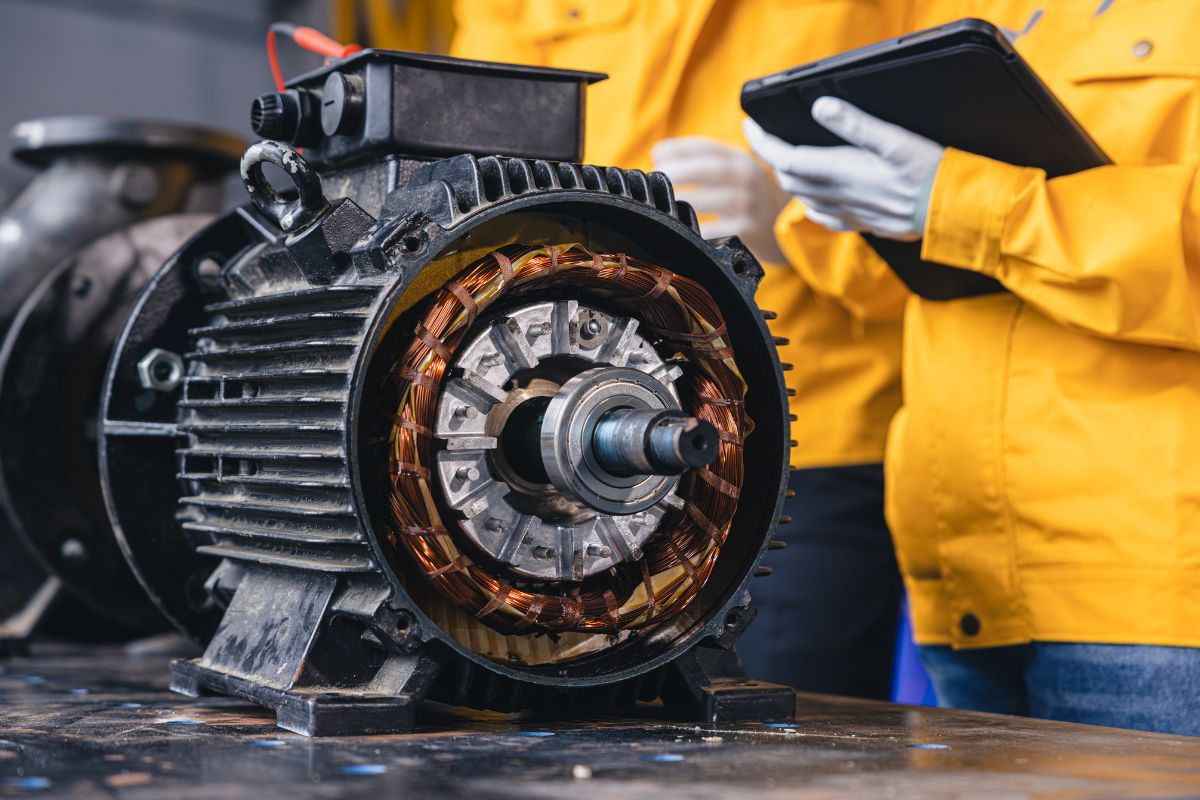
Energy-Saving Motor

3. Improve Motor Performance and Reliability

An energy-saving motor can also support more reliable industrial operations. Modern motor designs often incorporate improved materials, manufacturing processes, and components that help reduce energy losses and operating temperatures.
Depending on the motor design and application, these improvements may contribute to more stable performance during normal operating conditions. Reliable motors are particularly important in manufacturing facilities where unexpected equipment interruptions can affect production schedules and delivery commitments.
However, businesses should ensure that the replacement motor matches the equipment’s operating requirements. Selecting a motor with the appropriate power rating, speed, torque, and operating characteristics helps maintain consistent machinery performance.

4. Support Energy Efficiency and Sustainability Goals

Reducing electricity consumption can help industrial businesses manage their environmental impact. Since industrial facilities rely heavily on motors, improving motor efficiency can help reduce total energy consumption. This may also help businesses make progress toward internal sustainability targets and broader environmental objectives.
An energy-saving motor for industrial applications can support these efforts by using less electricity to deliver the required mechanical output. When combined with other energy management measures, such as optimizing equipment loads and reducing unnecessary operating hours, motor upgrades can contribute to more efficient production processes.
Businesses should also consider the condition of their entire motor-driven systems. Upgrading to an efficient motor may not achieve the desired savings if connected equipment, such as pumps, fans, and compressors, is not properly configured.

Improve Your Equipment Efficiency Now

Unlock better performance and reduce energy waste with expert maintenance and upgrades tailored to your machinery.

5. Determine Whether the Investment Offers a Good Return

Not every industrial motor requires immediate replacement. The benefits of upgrading depend on factors such as motor age, efficiency, operating hours, electricity rates, and workload. Motors that run for longer periods may offer greater potential for energy savings.
Before upgrading, businesses should compare the energy consumption of the existing motor with the proposed replacement. Estimating the payback period based on the investment cost and expected electricity savings can also help determine whether the upgrade is worthwhile.
For a more accurate assessment, consider the following:
  • Operating hours: Motors that run for long periods may generate greater cumulative energy savings.
  • Existing motor efficiency: Older or inefficient motors may offer more opportunities for improvement.
  • Electricity rates: Higher electricity costs can make efficiency upgrades more financially attractive.
  • Motor load: Motors should be appropriately sized for the equipment and its actual operating requirements.
  • Replacement expenses: Include purchase, installation, downtime, and any necessary system modifications.
A life-cycle cost analysis helps businesses assess the total financial benefits of an upgrade beyond its initial purchase cost.

6. Consider Motor Compatibility and Installation Requirements

Choosing an energy-efficient motor involves more than comparing efficiency ratings. The replacement must be compatible with the existing machinery, electrical supply, and operating environment. Differences in motor dimensions, mounting arrangements, shaft height, and connection requirements may affect the installation process.
Businesses should review several technical specifications before selecting a replacement motor:
  • Power rating: Ensure the motor can provide sufficient power for the connected equipment.
  • Speed and torque: Check that the motor meets the machinery’s operating requirements.
  • Frame size: Confirm that the motor fits the existing mounting arrangement.
  • Electrical specifications: Verify voltage, frequency, current, and other supply requirements.
  • Operating environment: Consider exposure to heat, dust, moisture, and other industrial conditions.
Professional assessment and installation can help prevent compatibility issues and ensure that the new motor operates as intended. It is also important to assess the connected equipment because an unsuitable system configuration may reduce the benefits of the upgrade. 

7. Upgrade Motors as Part of a Maintenance Strategy

Motor replacement can be a suitable opportunity to improve an industrial facility’s overall maintenance approach. Instead of waiting for equipment to fail, businesses can review motor condition, performance, and energy consumption regularly to identify opportunities for improvement.
For example, when an existing motor reaches the end of its service life or requires major repairs, businesses can compare the cost of repairing it with the benefits of installing a more efficient replacement. This approach allows maintenance teams to consider energy efficiency during normal equipment replacement decisions.
Regular maintenance is still necessary after upgrading. Businesses should schedule inspections, monitor operating temperatures, check for unusual vibration, and ensure that lubrication and ventilation requirements are met. These practices help maintain motor performance and identify developing problems before they lead to unexpected interruptions.
By combining efficient motor selection with proper maintenance, businesses can improve equipment reliability and manage operating expenses more effectively.

Conclusion

Upgrading to an energy-saving motor can be a worthwhile investment for industrial businesses, particularly those operating motors for extended periods or relying on older, inefficient equipment. Potential benefits include lower electricity consumption, reduced operating costs, improved equipment performance, and progress toward sustainability goals.
However, the decision should be based on actual operating conditions rather than efficiency ratings alone. Businesses should assess motor sizing, compatibility, installation expenses, and expected energy savings before proceeding. With proper planning and maintenance, an energy-efficient motor can support more cost-effective and reliable industrial operations.

PPM

Predict. Prevent. Maintain. For Reliability, Efficiency, and Sustainability