
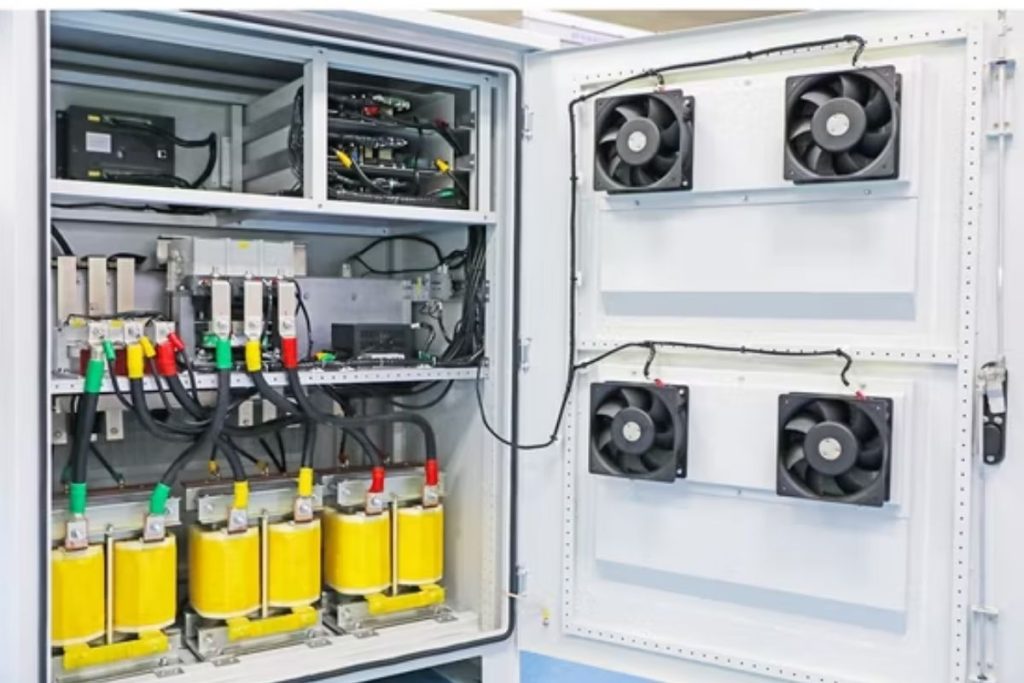
Choosing the Right Active Voltage Conditioner for Your Business
April 13, 2026 Uncategorized In today’s technology-driven business environment, maintaining a stable and reliable electrical supply is critical. Voltage fluctuations, surges, and sags can severely impact equipment performance, reduce lifespan, and even halt operations. For businesses that rely on sensitive electronic equipment, from data centers and manufacturing facilities to commercial offices, maintaining consistent voltage is essential to ensure productivity and protect valuable assets. An active voltage conditioner (AVC) is a device designed to stabilize voltage, protect equipment from irregularities, and enhance overall operational efficiency. Selecting the right AVC for your business requires understanding your electrical needs, equipment sensitivity, and operational goals. What Is an Active Voltage Conditioner? An active voltage conditioner is an electrical device that monitors incoming voltage in real time and corrects fluctuations by regulating the output voltage to a safe and consistent level. Unlike passive devices that only absorb surges or filter noise, AVCs actively adjust voltage levels, ensuring that connected equipment receives clean and stable power. Key benefits of using an AVC include: Protection from voltage spikes and surges: Prevents damage to sensitive electronics Correction of under-voltage and over-voltage conditions: Ensures consistent operation of machinery and equipment Reduction of downtime: Prevents unexpected shutdowns caused by unstable power Extended equipment lifespan: Protects motors, computers, and industrial devices from premature failure By maintaining stable voltage, AVCs not only protect equipment but also improve overall efficiency and reliability in business operations. Why Your Business Needs an Active Voltage Conditioner Voltage fluctuations are more common than many businesses realize. Power grids can experience sudden changes due to high demand, weather events, or industrial activity, leading to sags (low voltage), swells (high voltage), or short-term spikes. Even small voltage irregularities can negatively impact sensitive equipment. Here’s why an AVC is crucial for your business: 1. Protecting Sensitive Equipment Modern enterprises rely heavily on delicate devices such as computers, servers, CNC machinery, and medical instruments. Even minor voltage variations can lead to malfunctions, data loss, or permanent damage. AVCs provide consistent voltage to ensure smooth operation and reduce the risk of costly repairs. 2. Maintaining Operational Efficiency Voltage fluctuations can cause equipment to underperform or stop functioning. For production facilities, this may mean lower output or halted lines. AVCs ensure machinery operates at peak efficiency, preventing costly downtime and maintaining productivity. 3. Reducing Energy Waste Unstable voltage can lead to inefficient energy consumption, as equipment may draw more power than needed to compensate for sags or surges. AVCs stabilize voltage, helping businesses reduce energy wastage and lower utility bills. 4. Extending Equipment Life Voltage irregularities stress electrical components, reducing their lifespan. AVCs protect devices from these stresses, prolonging operational life and maximizing return on investment. 5. Compliance and Safety Many industries have strict electrical and safety standards. Using an AVC helps businesses maintain compliance with these regulations and ensures a safe environment for employees and equipment. Improve Your Equipment Efficiency Now Unlock better performance and reduce energy waste with expert maintenance and upgrades tailored to your machinery. Contact Us Factors to Consider When Choosing an Active Voltage Conditioner Selecting the right AVC requires careful evaluation of your business’s power needs and operational requirements. Here are the key factors to consider: 1. Load Capacity Determine the total power consumption of the equipment you want to protect. AVCs are rated by their load capacity in kilowatts (kW) or kilovolt-amperes (kVA). Choosing an AVC with sufficient capacity ensures it can handle peak loads without being overloaded. 2. Voltage Range Assess the range of voltage fluctuations your facility experiences. Some AVCs are designed for minor variations, while others can correct large sags and swells. Matching the device’s correction range to your voltage conditions is essential for effective protection. 3. Response Time The speed at which an AVC reacts to voltage changes is critical. Fast-response units prevent voltage spikes or dips from affecting equipment, ensuring uninterrupted operation. 4. Type of Equipment Consider the sensitivity of your devices. Advanced regulation features are essential for high-precision devices, while everyday office equipment can be protected with standard voltage stabilization. 5. Installation Requirements Check the installation process and space requirements. Some AVCs can be integrated into existing electrical panels, while others require separate enclosures. Proper installation ensures optimal performance and safety. 6. Maintenance and Support Evaluate the maintenance needs and manufacturer support. AVCs with remote monitoring and diagnostics can simplify maintenance, while reliable customer support ensures issues are resolved quickly. 7. Cost vs. Benefit While higher-capacity AVCs or units with advanced features may have a higher upfront cost, the long-term benefits—reduced downtime, equipment protection, and energy savings—often outweigh the initial investment. Types of Active Voltage Conditioners There are different types of AVCs designed for various applications: Single-phase AVCs: Suitable for small businesses or office equipment with moderate power requirements Three-phase AVCs: Ideal for industrial plants, manufacturing equipment, and high-capacity machinery Digital AVCs: Provide precise voltage regulation using microprocessor-controlled systems Hybrid AVCs: Combine active and passive correction techniques to protect against both minor and major voltage irregularities Choosing the right type depends on the size of your facility, its power demands, and the sensitivity of your equipment. Installation Best Practices To maximize the benefits of an AVC: Position near the main power source: Ensures the entire facility receives stabilized voltage Perform load analysis before installation: Confirms that the AVC capacity matches your electrical demand Hire certified technicians: Proper installation prevents wiring errors and ensures safety compliance Integrate with existing maintenance systems: Allows monitoring and troubleshooting alongside other electrical systems Proper installation guarantees that the AVC functions effectively and delivers reliable voltage stabilization. Conclusion Choosing the right active voltage conditioner is essential for businesses that rely on sensitive electronic equipment or high-capacity machinery. AVCs protect against voltage fluctuations, reduce energy waste, prevent equipment damage, and improve operational efficiency. When selecting an AVC, consider factors such as load capacity, voltage range, response time, equipment type, installation requirements, and maintenance support. Investing in a high-quality AVC not only safeguards your equipment but also contributes to long-term cost savings and enhanced business performance. For businesses
Choosing the Right Active Voltage Conditioner for Your Business Read More »