Industrial machinery is essential for manufacturing and production operations, but continuous use can lead to component wear, overheating, and unexpected breakdowns.
Predictive maintenance for industrial machinery helps businesses identify potential equipment problems before they disrupt daily operations.
Using sensors, monitoring systems, and data analysis, predictive maintenance allows businesses to assess machinery conditions and detect early signs of failure. These technologies help improve equipment reliability, minimize downtime, and manage maintenance costs more effectively.
1. Vibration Analysis Technology
Vibration analysis is a widely used predictive maintenance technology that helps detect mechanical problems through unusual machinery vibrations. Changes in vibration levels, frequency, and intensity can indicate potential equipment faults.
Using vibration sensors and analyzers, technicians can monitor equipment conditions and identify issues such as bearing defects, shaft misalignment, and mechanical imbalance. This technology is particularly useful for monitoring motors, pumps, compressors, fans, and industrial gearboxes.
Common machinery problems identified through vibration analysis include:
- Bearing defects: Detect wear, damage, or irregular movement in machine bearings.
- Shaft misalignment: Identify alignment issues that may cause excessive vibration.
- Mechanical imbalance: Detect uneven weight distribution in rotating components.
- Gearbox problems: Identify unusual vibration patterns associated with damaged gears.
- Looseness: Recognize loose mechanical components that may affect equipment stability.
Monitoring vibration patterns allows technicians to identify potential equipment problems and take corrective action before they worsen.
2. Thermal Imaging Technology
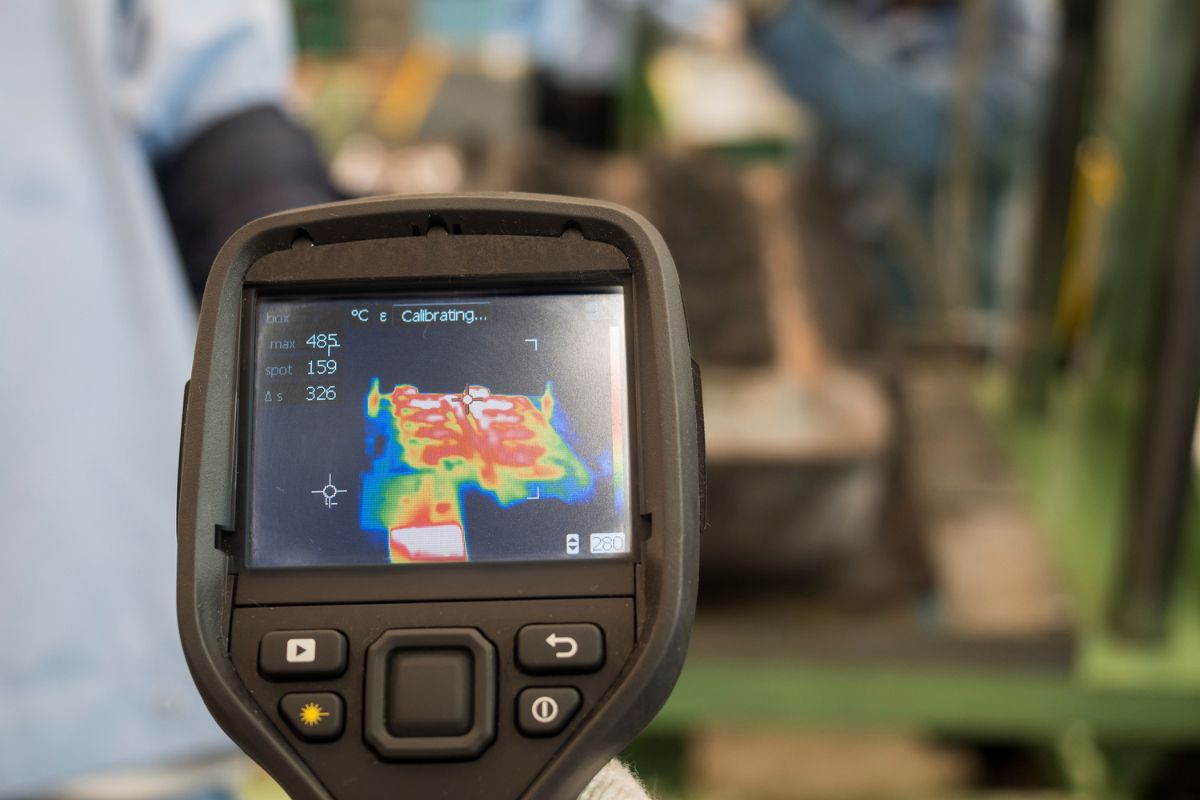
Thermal imaging uses infrared cameras to detect temperature variations in machinery and electrical components without direct physical contact. Unusual heat levels may indicate problems such as excessive friction, electrical resistance, poor connections, or cooling system issues.
This technology helps technicians identify abnormal temperature patterns and detect potential equipment faults early. It is commonly used to inspect electrical panels, motors, transformers, bearings, and industrial processing equipment.
Some common applications include:
- Electrical inspections: Identify overheating connections, circuits, and electrical components.
- Motor monitoring: Detect unusual temperature increases that may indicate motor problems.
- Bearing inspections: Identify excessive heat caused by friction or lubrication issues.
- Cooling system checks: Detect temperature irregularities that may affect equipment performance.
By identifying abnormal heat conditions early, businesses can address potential problems before they result in equipment failure or safety concerns.